Ouattara needs to look beyond Abidjan to win duel
http://www.ft.com/cms/s/0/d008f8de-2976-11e0-bb9b-00144feab49a.html?ftcamp=rss
http://www.ft.com/cms/s/0/d008f8de-2976-11e0-bb9b-00144feab49a.html?ftcamp=rss
By William Wallis in London
Published: January 26 2011 18:19 | Last updated: January 26 2011 18:19
In spite of an international outcry, the post-election duel that has paralysed Ivory Coast since late November has mostly gone Laurent Gbagbo’s way – at home.
Although subject to a growing list of sanctions, the populist incumbent is stubbornly in place, refusing to concede defeat. He controls the airwaves and oil revenues and so far has sufficient funds to pay the army.
Gradually he is winning some of his African peers towards his point of view. He has support too on African streets, where he is seen by some not as a usurping kleptocrat but as a latter-day Lumumba (Congo’s independence hero), facing a French-led, neo-imperialist plot.
His adversary, Alassane Ouattara, a former International Monetary Fund director, has well-placed friends abroad. He is armed with a convincing claim to legitimacy, having won elections according to UN-certified results.
Out of principle, the world has mostly swung behind Mr Ouattara. The repercussions of allowing another African vote to be stolen could be severe in a year when 17 or so incumbents face the ballot box, equally tempted to jettison fair play.
Yet if Mr Ouattara is to win authority over events at home and sustain support abroad, he needs a game-changer. It looks unlikely he will find one soon in Abidjan, the coastal commercial capital.
There his supporters have been locked down by pro-Gbagbo goons and he has looked the passive observer, under siege in a luxury hotel, protected by UN peacekeepers.
Mr Ouattara’s decision this week to order a halt to cocoa exports, on which the world depends for chocolate, could weaken the regime’s finances. It showed too that international recognition counts for more than just moral support.
But it is no knockout punch. Nor does it lay the ground for an easy takeover should Mr Gbagbo “fall like rotten fruit”. If and when that happens there will be the economic fallout of sanctions to contend with, as well as the threat of civil war.
Part of the answer may lie elsewhere – in Yamoussoukro. Home of the late Félix Houphouët-Boigny, Ivory Coast’s long-time autocrat, it is most famous for its Catholic cathedral – the world’s largest. It is also the country’s titular capital, centrally located 255km north of Abidjan. It could be the city from which Ivory Coast’s parts, first divided by civil war in 2002, could be reassembled.
Securing the city for Mr Ouattara is an idea that will be floating around at this weekend’s African Union summit in Addis Ababa, where Nigeria in particular will press the west African case for military intervention as a last resort.
So far, west African countries have been reluctant to move much beyond sabre-rattling, partly out of fear that regional troops would be ill-prepared to take the populous city of Abidjan and might be sucked into a drawn-out war.
Securing Yamoussoukro for the president-elect would be easier and has other advantages. It would shift the international debate from ousting the incumbent, a position that divides Africa, to the less controversial one of assisting Mr Ouattara in fulfilling his mandate.
As Mr Gbagbo is gradually asphyxiated by sanctions, a process that could take many months, the president-elect could get on with assembling a broad-based government to revive economic prospects and foster reconciliation.
There would, of course, be attendant risks. One is that Mr Gbagbo would seek to defend the city, firing the opening shots of war. Another is that Mr Ouattara’s abandoned supporters in Abidjan, and the large number of west African immigrants there, would come in for retaliatory attacks. To prevent that, the UN
would have to give its peacekeepers a more robust mandate to protect civilians.
It might be argued that Ivory Coast would then have two presidents with an arms build-up on both sides. But that is already in effect the case, with one in control of the south and another whose state consists of a five-star Abidjan hotel and whose army is made up of rebels stationed in the north.
None of the other options on the table – power-sharing, splitting the country or storming Abidjan – looks workable or desirable. A well-supported Yamoussoukro government might have a chance of leading the country back from the brink.

About Me
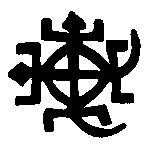
- Crossed Crocodiles
- In Akan symbolism there is a design of crossed crocodiles, two joined crocodiles that share the same stomach. You can find the description at the Akan Cultural Symbols Project by scrolling down the page of Akan Political Beliefs. I have always been particularly fond of this as a symbol for the competing interests of constituents in a democracy. FUNTUMFUNAFU DENKYEM FUNAFU - JOINED CROCODILES Symbol of UNITY IN DIVERSITY, DEMOCRACY, and UNITY OF PURPOSE The symbol is also referred to as odenkyem mmemu - Siamese twin crocodiles joined at the stomach. From the proverb: Funtumfunafu, denkyemmfunafu, won afuru bomu nso wodidi a na worefom efiri se aduane ne de ye di no mene twitwi mu. Literal translation: Two headed crocodiles fight over food that goes to a common stomach because each relishes the food in its throat. This symbol, in essence, depicts the Akan notions about the inherent difficulties of reconciling individual and group interests in a democratic system. (You can reach me at crossedcrocodiles [the usual at] gmail [dot] com.