Congo rulers use crisis to review poll laws
By Katrina Manson in Nairobi
The Financial Times
Published: January 4 2011 22:39 | Last updated: January 4 2011 22:39
Ivory Coast’s disputed election may have become Africa’s latest get-out-of-democracy-free card, after the Democratic Republic of Congo, the vast mineral-rich country to its south, announced it wants to revise its constitution to avert a similar fate.
The government of Congo, which suffers from a conflict in its east that has displaced more than 1.4m people in the past 18 months alone, said this week it would seek to do away with a second round in presidential elections due to be held this year, a move many regard as a pretext for an early victory for Joseph Kabila, the incumbent president.
Such a hefty constitutional change will need a three-fifths majority vote in both its houses of parliament, which Lambert Mende, minister of information, said the government would seek “as soon as possible” ahead of polls due in November.
A second round of voting, should no candidate win an outright majority, was to have taken place three months later.
“Elections in Africa often end in confrontation of an ethnic character rather than political – we do not want to experience what happened in Kenya, Guinea and now in Ivory Coast,” Mr Mende told the Financial Times by telephone from Congo’s capital, Kinshasa, saying that abolishing the second round would help avoid repression, riots, “and maybe a war”.
Second-round polls, which tend to boost opposition chances, have also ushered in instability and violence in Africa, as political parties jostle throughout hostile campaign periods in which the winner will eventually take all.
Laurent Gbagbo, Ivory Coast’s presidential incumbent, has refused to leave office since November 28 elections, despite a widely recognised victory for his rival, Alassane Ouattara, at a second-round poll.
Sierra Leone is one of the few countries in Africa in which an opposition party has won power through the ballot box with little violence. Analysts say Congo’s fractured opposition, which is unlikely to unify under one banner at the first electoral hurdle, is bound to lose out.
“Politics in Congo is something of a zero-sum game and no candidate is likely to want to give up the chance of election,” said Chris Melville, Congo expert at political risk consultancy Menas Associates.
Opposition leader Francois Muamba of the MLC party said the decision overturned democracy and invited violence. “It means Kabila could win the elections with as little as 20-25 per cent – he will have no legitimacy and he is risking violence,” Mr Muamba said.
The Financial Times Limited 2011. You may share using our article tools. Please don't cut articles from FT.com and redistribute by email or post to the web.

About Me
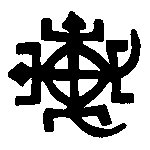
- Crossed Crocodiles
- In Akan symbolism there is a design of crossed crocodiles, two joined crocodiles that share the same stomach. You can find the description at the Akan Cultural Symbols Project by scrolling down the page of Akan Political Beliefs. I have always been particularly fond of this as a symbol for the competing interests of constituents in a democracy. FUNTUMFUNAFU DENKYEM FUNAFU - JOINED CROCODILES Symbol of UNITY IN DIVERSITY, DEMOCRACY, and UNITY OF PURPOSE The symbol is also referred to as odenkyem mmemu - Siamese twin crocodiles joined at the stomach. From the proverb: Funtumfunafu, denkyemmfunafu, won afuru bomu nso wodidi a na worefom efiri se aduane ne de ye di no mene twitwi mu. Literal translation: Two headed crocodiles fight over food that goes to a common stomach because each relishes the food in its throat. This symbol, in essence, depicts the Akan notions about the inherent difficulties of reconciling individual and group interests in a democratic system. (You can reach me at crossedcrocodiles [the usual at] gmail [dot] com.