from: http://www.quantico.usmc.mil/seabasing/resources/graphics.htm
http://www.quantico.usmc.mil/Seabasing/docs/Haiti%20Response%20Article%200.1.doc
Amphibious Ships Key Disaster Response Enabler
[VERSION ONE]
The destructive power of the January 12 Haitian earthquake has led to an almost complete collapse of civil infrastructure in this small Caribbean island nation. The unique capability of amphibious ships to position off shore and respond to humanitarian needs by various means demonstrates more than ever the utility of amphibious forces.
As the massive outpouring of support continues, it is important to note what is required to most efficiently solve the immediate problems of the Haitian government.
As nations and private institutions react to immediate needs, media reports indicate that there is presently more confusion than control. This circumstance is to be expected with devastation this widespread, especially during the early hours and days following a disaster of this magnitude.
Helping a disaster-torn nation recover means more than just provision of immediate needs, the nation and its government need time to take stock and to reorganize. It needs time to start the more permanent recovery actions, and most of all, the long-term support capabilities necessary to enable recovery.
The US military, and particularly the capabilities resident in our amphibious forces, are key enablers in this regard.
Amphibious forces not only have the wherewithal to meet immediate needs, but the ability to initiate and facilitate more permanent recovery. These capabilities include not just engineering, medical, and security skills, but the command and control capabilities that facilitate reestablishing centralized leadership and management of the recovery effort.
Air power provides an invaluable means to quickly deliver personnel—especially those charged with assessing the situation and determining requirements. It is limited, however, in the volume of material—supplies and heavy equipment—it can deliver. Sealift is still the most efficient means of delivering materiel in volume.
For example, in order to provide the same amount of equipment one maritime prepositioning ship is capable of providing it would take 400 C-17 shipments.
Amphibious forces backed up prepositioning ships and support vessels provide tremendous recovery capability, permitting the kind of effort that contributes to initial stabilization of the situation, followed by initiation of more permanent solutions.
It is not practical to fly in all the necessary support especially when the high weight and volume of aid is considered and when required airports are often not operational at the outset of a crisis. This is why the majority of our military’s vehicles, equipment and supplies are delivered by sea.
Naval Forces aboard amphibious ships are uniquely configured to provide support to disaster relief and humanitarian assistance operations.
Amphibious ships include the following key services from mobile, self-sustaining, and protected platforms:
• Food
• Water
• Surface and Air Transportation
• Medical and Dental
• Command and Control
• Minimal footprint ashore
• Self sustaining
• Security
• Billeting
The current Navy-Marine Corps response to Haiti’s crisis is not new. The Navy-Marine Corps team supported disaster relief efforts from the sea in Haiti in September 2008. An amphibious ship using embarked helicopters and landing craft delivered 3.3 million pounds of aid to people isolated by Hurricane damage.
Given the weight, volume and cost advantages of seaborne transportation, ships have long been recognized as the most useful means of disaster relief. This has been demonstrated many times and in many places. For example, the tsunami in Indonesia in 2004; Hurricane Katrina in New Orleans; the earthquake in Pakistan in 2005; the earthquake in Peru in August of 2007 and the cyclone in Bangladesh in late 2007.
Additionally, amphibious ships were available for disaster relief operations following the May 2008 cyclone in Burma, but the ruling military junta there did not allow the aid.
It is simple; the value gained by getting the scale of capability and capacity Marines and amphibious ships bring cannot be duplicated by any other current military or civilian means.
One amphibious ship can carry 1,700 Marines, along with the supplies and equipment needed for 15 days, and move them quickly ashore and back by either helicopter or surface craft.
Additionally one amphibious ship can provide medical facilities such as 6 Operating Rooms, 17 ICU Beds, 47 Ward Beds, and 60 Overflow beds.
The value of amphibious ships are not lost on nations with navies, they are building more and relying more on their amphibious ships, which can carry thousands troops and a myriad of aircraft and vehicles.
In every maritime era, there is always one type of ship that has been key to executing our Nation’s maritime strategy, today, and for the foreseeable future, it is the amphibious ship.

About Me
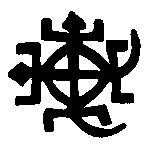
- Crossed Crocodiles
- In Akan symbolism there is a design of crossed crocodiles, two joined crocodiles that share the same stomach. You can find the description at the Akan Cultural Symbols Project by scrolling down the page of Akan Political Beliefs. I have always been particularly fond of this as a symbol for the competing interests of constituents in a democracy. FUNTUMFUNAFU DENKYEM FUNAFU - JOINED CROCODILES Symbol of UNITY IN DIVERSITY, DEMOCRACY, and UNITY OF PURPOSE The symbol is also referred to as odenkyem mmemu - Siamese twin crocodiles joined at the stomach. From the proverb: Funtumfunafu, denkyemmfunafu, won afuru bomu nso wodidi a na worefom efiri se aduane ne de ye di no mene twitwi mu. Literal translation: Two headed crocodiles fight over food that goes to a common stomach because each relishes the food in its throat. This symbol, in essence, depicts the Akan notions about the inherent difficulties of reconciling individual and group interests in a democratic system. (You can reach me at crossedcrocodiles [the usual at] gmail [dot] com.